
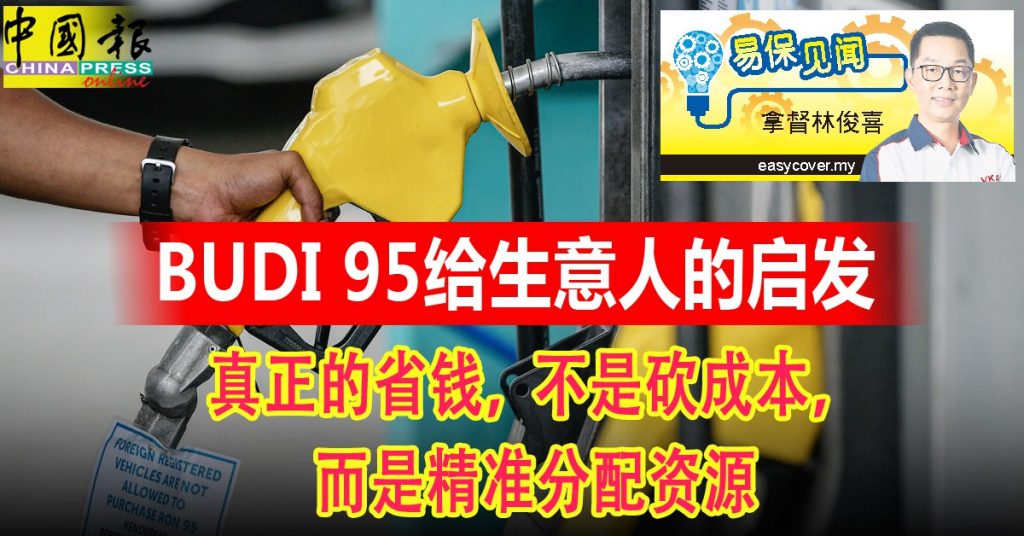
With just a simple MyKad tap at the petrol station, your RON95 fuel price automatically drops. That’s the experience many Malaysians now have since the BUDI MADANI RON95 fuel subsidy program (known as BUDI 95) was officially implemented on September 30, 2025. On the surface, it’s a government initiative to ease citizens’ cost of living—but from a business perspective, the system behind BUDI 95 offers valuable lessons for SMEs.
The era of blanket subsidies is over. Under BUDI 95, the government has shifted to a targeted subsidy model. Any Malaysian citizen aged 16 and above with a valid driving license can enjoy RON95 petrol at RM1.99 per litre at the pump, with a cap of 300 litres per month per person. This allowance covers 99% of drivers’ needs (roughly 3,000km/month). This system not only curbs leakages such as foreigner exploitation and fuel smuggling, but also helps the country save over RM4 billion annually.
For business owners, the real inspiration from BUDI 95 isn’t just the cheaper fuel—it’s the systematic thinking behind it: how to allocate resources precisely, keep processes simple and transparent, and prioritize those who need help most. These are principles that SMEs can adopt in their daily operations too.
Use Limited Resources Where They Matter Most
One of the reasons BUDI 95 saves so much money is because it stops giving everyone the same benefit. Instead, it channels resources to those who need them the most. This “targeted deployment” mindset is especially relevant for small business owners constantly facing limited manpower, time, stock, or advertising budgets.
Rather than trying to do everything, SMEs can learn to set internal “quotas”—like KPIs for each department—track performance, and adjust budgets based on results. Cut where needed. Focus your limited energy on what truly drives growth.
Employee Benefits Aren’t Costs—They’re Fuel for Productivity
The BUDI 95 subsidy is ultimately about protecting the mobility and productivity of Malaysians, helping them get to work and maintain daily life. In the same spirit, business owners should rethink employee benefits—not as burdens, but as investments that drive loyalty and output.
We often see high staff turnover in SMEs. Sometimes it’s not about salary—it’s about employees feeling like their well-being isn’t valued. You don’t need a huge budget to start. Small gestures like providing group medical insurance, accident protection, or even basic health checkup subsidies—especially for mobile staff like salespeople or field technicians—can go a long way.
Studies show that replacing a single employee costs a business over RM10,000 in recruitment and training. Offering proper benefits can improve satisfaction, reduce sick days, and improve long-term team stability.
The Simpler the Tech, the Higher the Trust
Another major strength of BUDI 95 is its tech integration made simple. Users don’t need to download a new app—just scan their MyKad at the petrol station, and everything’s logged automatically. Usage data is trackable online or via petrol station apps. Easy, transparent, and trustworthy.
This principle should guide how SMEs adopt tech too. Tech doesn’t need to be fancy—it needs to work well and be easy to use. Whether it’s switching to a cloud accounting system, introducing a CRM to improve sales efficiency, or using platforms like easycover.my to manage employee insurance, claims, and benefits all in one place—these tools improve operations and create a sense of fairness and structure.
When systems are clear and transparent, employees feel more secure—and are more likely to stay.
Fair, But With a Human Touch
BUDI 95 isn’t a flat-out one-size-fits-all model. It gives priority to frontline workers, low-income earners, and security personnel. This “fair but empathetic” policy is something businesses should take note of.
Employee benefits don’t have to be identical across the board. They can be customized for different needs: more onboarding support for new hires, flexible hours for single parents, or retirement planning help for older staff. These human-centered designs strengthen company culture and team cohesion—and for larger businesses, can even count toward ESG or CSR objectives.
Risk Management + Sustainability = Long-Term Survival
BUDI 95 works well because it includes a risk-control mechanism. By verifying ID at the point of use, it blocks abuse and prevents leakages. Businesses should also build internal safeguards to ensure their operations are sustainable.
On the benefits side, this could mean complementing medical insurance with liability insurance, cybersecurity protection, or workers’ compensation coverage to handle unexpected disruptions. Plus, the program’s implicit encouragement of energy-saving and reduced carbon emissions offers another cue—why not introduce green travel subsidies or eco-office incentives to cut costs and support sustainability?
Final Thoughts
BUDI 95 isn’t just about cheaper petrol—it’s about a well-designed, data-backed, transparent system. It reminds us that real efficiency comes from structured processes, and real savings come from targeted use—not across-the-board cuts.
Whether you’re running a microenterprise or scaling up a growing team, the lessons from BUDI 95 are clear:
Set priorities. Protect your people. Embrace simple tech. Build for the long term.
Once you build a system, you’re no longer reacting to chaos—you’re driving your business forward, with your team as the engine.